Program of donated gonadal cells
Who is the program for?
This program is targeted at couples, which, due to various reasons, cannot use their own gonadal cells and need to replace them with donated ones. This option means a large psychological load for the treated couple, but on the other hand, it makes it possible for those couples, which otherwise could not hope in their own descendants, to have children.
In such cases that the sperms of the partner are utilized for the fertilisation of a donated ovum or if a donated sperm is used for the fertilisation of the ovum of the woman partner of the treated couple, the child is half their “own”. The future mother has a possibility to influence the nutrition of the foetus and its overall appearance. She carries the foetus for the whole pregnancy period and she lives through the extraordinary experiences of childbirth. As compared to adoption, these facts are a definite positive for the choice of adoption of the donated gonadal cells.
Legislation
In the Czech Republic, the donation of gonadal cells is allowed and regulated under the Act on the Research of the Embryonic Basic Cells. In accordance with this Act and pursue of the international standards (for example, Convention on Human Rights and Biomedicine, Regulations of the European Parliament and Council of Europe No. 2004/23/EG on determination of quality and safety standards for donation, collection, examination, processing, preservation, storage and distribution of human tissues and cells) in this country, the program of donated gonadal cells was created.
Our program of donation of gonadal cells
We try to select the donators of approximately the same phenotype as it is the receiver (colour of eyes, hair, blood group). Our donors meet rigorous criteria and they are selected according to the international rules.
In this country the donation is based on the solidarity of the donors to the receivers and this program is a non-profit one. We are aware of the fact that donation is a help and not a profit-making activity and therefore the receiver reimburses only those expenses, which are incurred by the donor in connection with the collection. These expenses are naturally of individual nature, thus it is not possible to determine them in advance. Therefore, in case of cycles with the donated gonadal cells, we have determined a bulk price, which is guaranteed for the receiver.
We are able to satisfy the persons interested in the donated gonadal cells usually within two months.
Donated ovum
Who is the ovum donor?
The female donors are healthy young women of up to 35 years of age, who undergo gynaecologic, endocrinologic and genetic examinations, and who are repeatedly tested for the presence of sexually transmitted diseases (HIV, syphilis, hepatitis, chlamydia, cytomegalovirus).
Who is the ovum receiver?
- A woman who has stopped creating her own ova (there has been an ovarian failure) – mostly women of about 40 years of age, but may also be younger
- A woman who, due to a genetic disease, does not create her own ova (for example, Turner syndrome)
- A woman who is a carrier (transmitter) of a hereditary disease, or who has a chromosomal defect
- A woman who has been treated with the method IVF, but too few of her own ova were collected, or the ova were not fertilised, or the embryos did not develop further
Sperm donation
Sperm donor
The sperm donor is a healthy man of up to 40 years of age, having a normal spermatogram in accordance with all the stated criteria, negative regarding sexually transmitted diseases, and having a normal caryotype. The donor usually goes to the collections several times, so that the CAR has a sufficient quantity of his sperm. After six months another collection for HIV test is performed and only after proving its negativity, the sperms are allowed to be utilized for the ovum fecundation.
How to become a donor of gonadal cells?
Should you become a donor of gonadal cells, please make an appointment for a consultation at our CAR, tel: +420 222 313 000.
Ovum donor
What should you expect from the first consultation?
At the entry consultation, you will go through an interview with our doctor at the department of infertility treatment, who will make you familiar with the further procedure. After this, there will be an interview with a geneticist, who will work out the family tree and prescribe blood collections, which will be used to determine your chromosomal equipment. Based on these examinations it will be decided whether you will be added to the female donor register.
What will happen if you become the ovum donor?
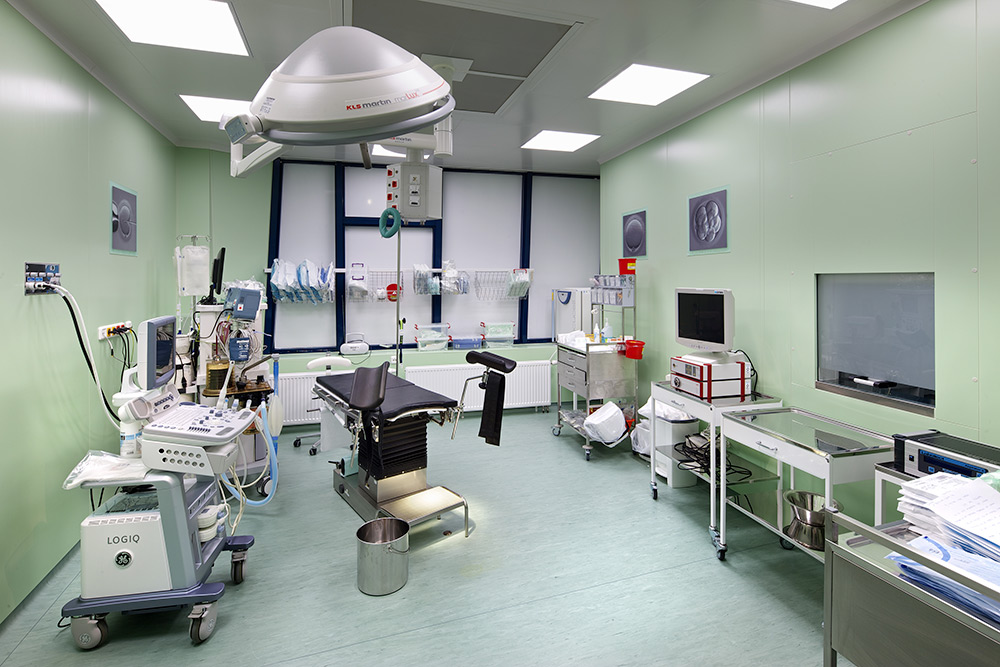
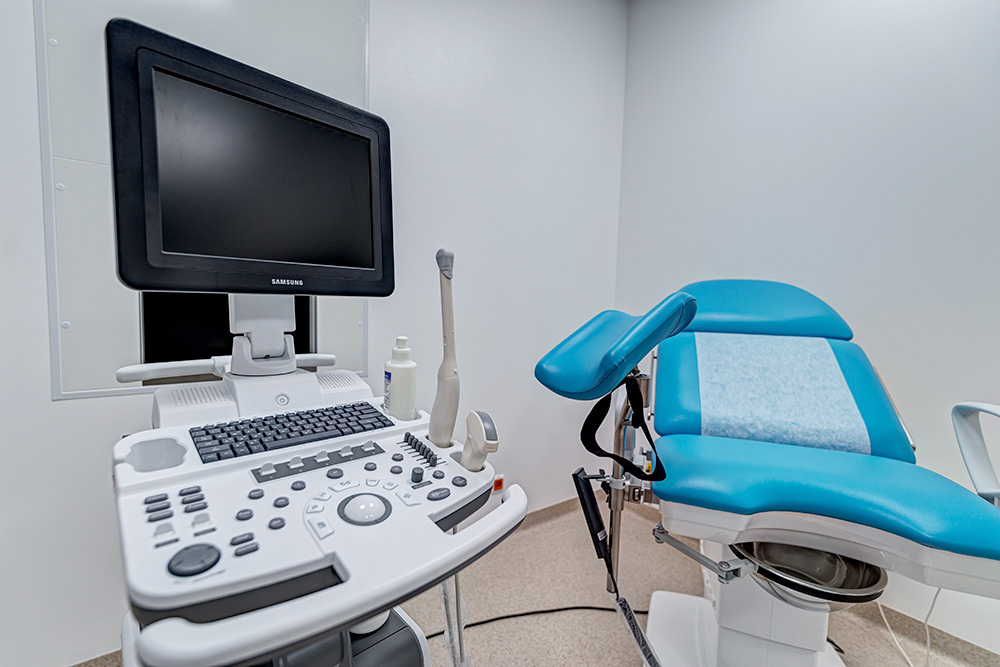
For a successful ovum collection for the purpose of the artificial fertilisation it is necessary that with one menstruation cycle a woman would create more ova than it is usual. Therefore, you will take stimulation medicaments, which will create more ova in your ovaries. These ova will therefore be collected in a certain phase of the cycle. The ovum collection is performed under a short-time general anaesthesia, through the vagina under the ultrasound control. If you feel well, in two up to three hours after the collection you can leave for home with an accompaniment.
What will happen to the ovum?
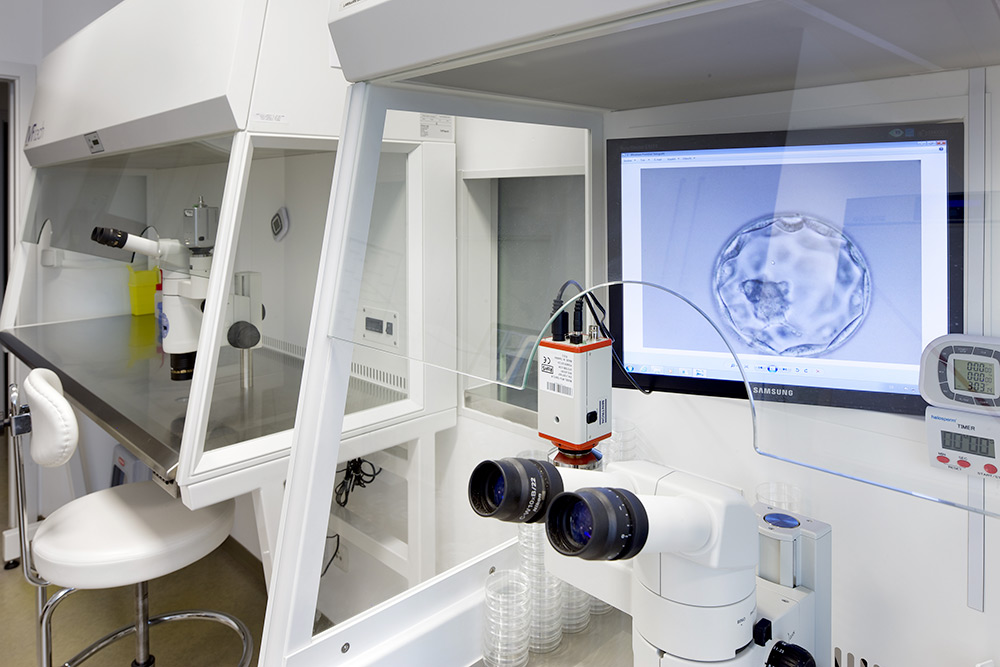
The collected ova are fecundated by the prepared sperms of the receiver’s partner. In two or three days after the fecundation, up to three embryos will be transmitted into the uterus; the others are usually stored for future utilization. The receiver is administered female hormones, which imitate the normal pregnancy course, so there is a growing endometrium at which the fertilised ovum could nest.
What will you obtain for a donation?
The donation is purely anonymous and free of charge. However, the expenses that occur directly due to the donation are reimbursed. These expenses fluctuate between thousands and tens of thousands of CZK, according to the individual conditions.